Galerie Peter Herrmann
|


 |
 |
|---|
Thermoluminescence - Expertise
|
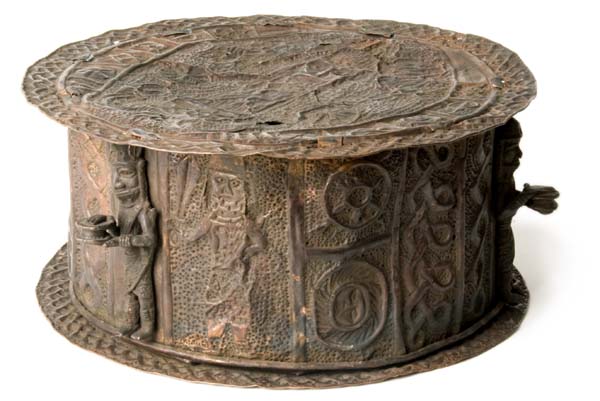
Receptacle Paul Garn Collection, Dresden. 1920 Benin, Nigeria appr. 1700 Copper sheet, 3 Bronzefigures 30 x 14 cm |
|
|---|
Receptacle |
The thinly hammered copper is decorated with punched motifs and ornaments. A particularly original idea is to place three figures on the outside of the side wall, holding a miniature replica of this vessel in their hands, as if they were presenting gifts to someone. Such containers may have served either as a kind of gift box or as a container for storing important items. The vessel is tightly sealed with thin metal plates, which would have broken if opened and closed repeatedly. The vessel was therefore intended for permanent storage and not – as suggested in the Vienna catalogue Benin. Kings and Rituals – as a container for kola nuts. In addition to the cast dignitaries attached to the sides, there are also embossed warriors, ornaments and sun symbols on the surface. On the lid, there is a larger figure with catfish legs and crocodiles in its hands. This motif is already known from various plates and refers on the one hand to Olokun, the sea god, and on the other to the paralysed Oba Ohen. The container from the Metropolitan Museum of Art, New York, discussed in the Vienna catalogue deals with the same central theme of the figure with catfish legs and crocodiles. Its material is described as European brass and dated to the end of the 19th century. In comparison, the object presented here is not only more elaborate and sensitively designed, but also older. The samples required for the TL analyses were taken from the back of the small bronze figures. See: |
|
