| |
|
updated: October 24, 2026 |
| |
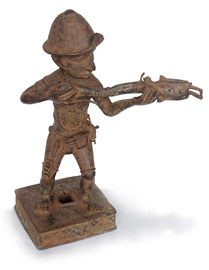
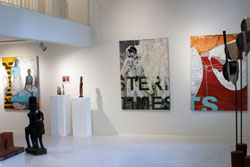
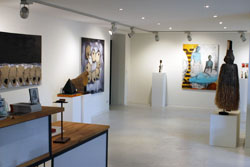
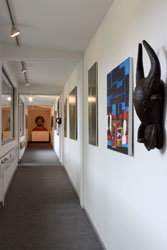
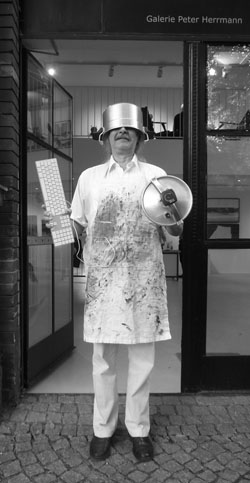
On this page, you can view Peter Herrmann’s private collection. The images show acquisitions made since his arrival in Lomé in 2013 and serve as legal documentation in accordance with European cultural property protection Act. |
| |
 |
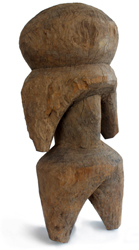
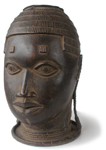
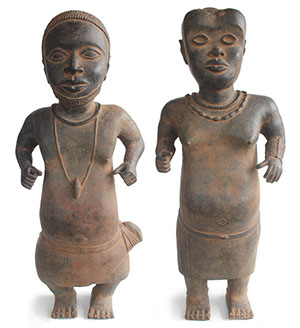
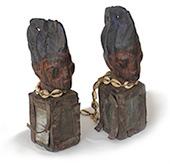
Dwarfs
Benin-Culture, Nigeria
Bronze
appr. 1700
33 + 34 cm |
 |
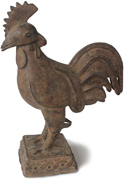
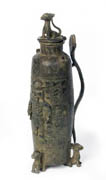
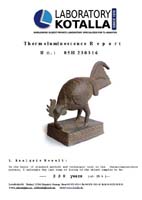
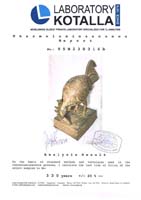
Rooster
Benin, Nigeria
Bronze
appr. 1700
33 cm |
| |
We have some big surprises in store for you. Over the next few days, this overview will be expanded to include further antique bronze and terracotta pieces. All of this is in preparation for a major, sensational exhibition on the gallery’s special themes, which has been in the planning stages for several years now.
The only problem is: where?
The obvious choice would be Germany. Southern or western Germany. But the Germans are racing full speed into a dead end, at the end of which stands a concrete wall. I believe that female humanities scholars still refuse to grasp that they are stealing items from museums that belong to the people—who may no longer be called that—and shovelling them into the pockets of an ultra-patriarchal potentate.
You can’t even sack them, because that would be misogynistic. They’ll never buy anything in their lives, because they need the taxpayers’ money for their gender-obsessed cliques, which extend right into the editorial offices.
You can work it out for yourselves. It looks like there won’t be an exhibition in Germany after all. Look forward nonetheless to the new images that will appear here over the coming weeks. |
|
 |
Male Figure
Nok-Culture, Nigeria
around 2000 years old
clay, 24 cm |
|

|
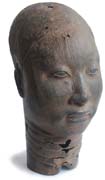
Head
Ife, Nigeria
Around 1650
Bronze, 15,5 cm |
|
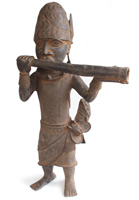 |
Horn Blower
Benin. Nigeria
+- 1750
Bronze. 63 cm |
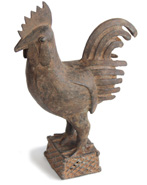 |
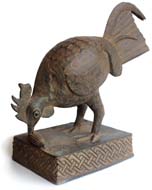
Rooster
Benin, Nigeriar
+- 1700
Bronze.37 cm |
|
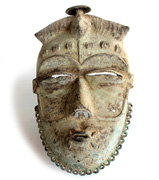 |
Mask
Guere, Ivory Coast
Bronze
+- 1720
37 cm |
 |
Bracelet
Ga, Ghana/Burkina Faso
Brass casting
around 250 years old
19 cm |
| |
 |
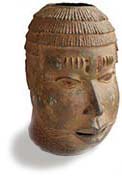
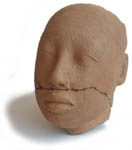
Head
Ife, Nigeria
Clay, 800 years
21 cm |
 |
2 Masks
Djimini, Ivory Coast
Bronze
+- 1700
23cm |
|
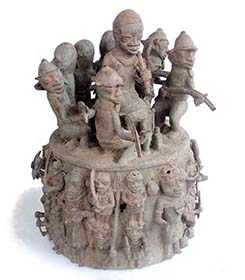 |
Monument
Benin, Nigeria
Around 1700
Bronze, 49 cm |
|
 |
Ram
Vessel for ritual purposes.
Benin-City, Nigeria
Bronze
around 270 years
40 x 41cm |
 |
Ram
Benin, Nigeria
Bronze
around 360 years
42x 39 cm |
|
 |
Rider
Gurunsi, Burkina Faso
Bronze, appr 1735
23 cm |
 |
Horsewoman on hyena
Iboku, Benue, Nigeria
Brass casting
around 270 years old
36 cm |
|
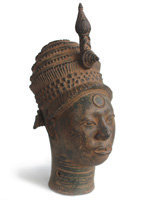 |
Head
Ife,. Nigeria
+- 1840
37 cm. Bronze |
 |
Head
Ife,. Nigeria
+- 580 years
25cm. Bronze |
|
 |
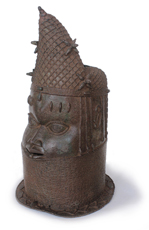
Head with Cock
Benin, Nigeria
Bronze
+-280 years
43 cm |
 |
Head
Benin. Nigeria
+- 240 years
23,5 cm. Bronze |
|
 |
Crocodile
Benin, Nigeria
Bronze
around 300 years
26 cm |
 |
Ram
Benin, Nigeria
Bronze
around 370 years
16 x 21cm |
| |
A minor sensation. There are no comparable properties. |
|
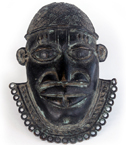 |
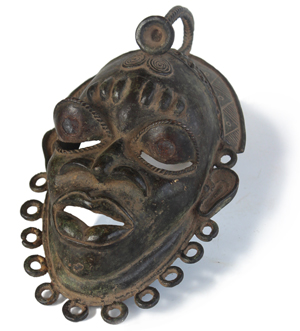
Hip mask
Benin, Nigeria
Bronze. 15,5 cm |
 |
Hip mask
Benin, Nigeria
appr. 17/18. century
Bronze. 17,5 cm |
| |
 |
|
|
| |
|
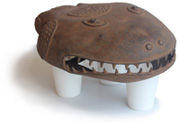
Rooster
Benin-Culture
Around 1680
Bronze. 42x46 cm |
|
|
 |
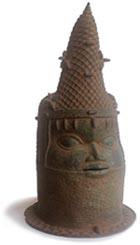
Snake Head
Benin, Nigeria
18/19. century
Bronze. 28 cm |
 |
Head
Benin, Nigeria
around 1780
Bronze. 44 cm
|
|
 |
Head
Ife-Culture
Around 1465
Clay 23 cm
|
|
Head
Ife-Culture
Around 1330
Clay 14 cm |
| |
Vessel
Benin-Culture.
Around 1580. Bronze. 28 cm
|
|
|
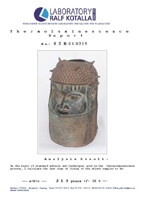
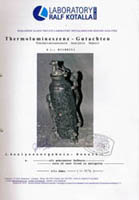
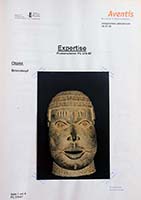
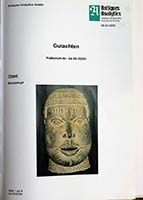
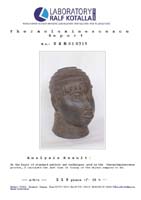
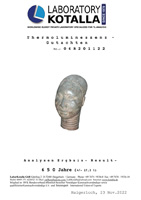
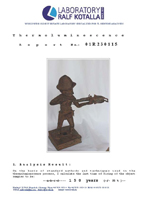
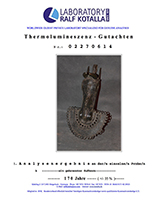
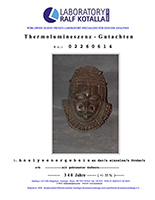
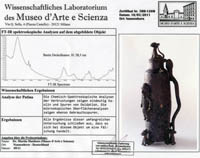
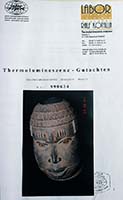
Thermoluminescence - Expertise
Labor Ralf Kotalla
|
|
Wissenschaftliches Laboratorium - Museo d'Arte e Scienza
FT-IR spektroscopic Analyse |
| |
 |
|
| |
 |
|
|
| |
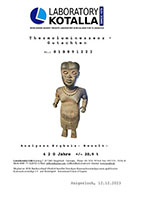
Thermoluminescence - Expertise
Labor Ralf Kotalla
|
Metallanalyse
Aventis |
Metallanalyse
Antiques Analytics |
|

|
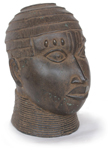
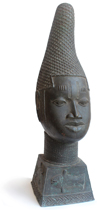
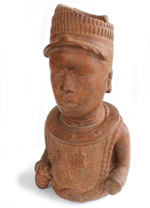
Bust
Ife. Nigeria
around 1450
Bronze. 37 cm |
 |
Bust
Ife. Nigeria
around 1450
Clay. 41 cm |
|
|
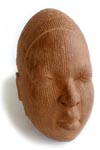
Head
Ife, Nigeria
appr 1500
Clay, 23 cm |
 |
Head
Nok-Culture, Nigeria
around 2300 years old
clay, 35 cm |
| |
|
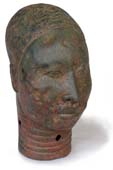
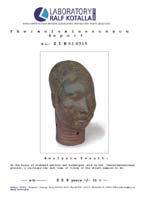
Head
Ife-Culture.
appr. 1370
Bronze. 31 cm |
 |
|
| |
|
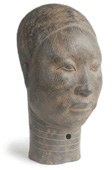
Head
Ife-Kultur.
1390
Bronze. 32,5 cm |
 |
Head
Ife-Kultur.
1450
Bronze. 32 m |
| |
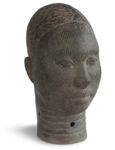
|
Head
Ife-Kultur.
age cannot be determined (≈14.Jhdt.)
Bronze. 32, cm |
|
 |
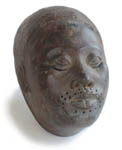 |
Mask
Ife, Nigeria
TL +- 1450
Bronze. 31 cm |
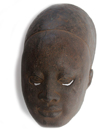 |
Mask
Ife, Nigeria
14th century
Bronze
30 cm |
| |
 |
Mask
Ife, Nigeria
TL +- 1500
Bronze. 29 cm |
 |
Mask
Ife, Nigeria
15th century
Bronze
28 cm |
|
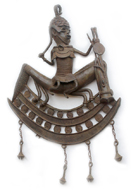
|
Rider
Tada-Culture
appr 1750
Bronze. 36 x 31 cm |
 |
Bell
Benin, Nigeria
Bronze
around 240 years
17 cm |
| |
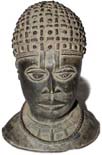 |
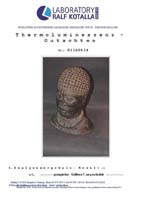
Bust of a women
Benin, Nigeria
appr. 50 to 150 years
TL = geological
Bronze. 28 cm |
|
| |
In Stock: Classic art from Africa - Benin, Ife, Fang, Bamana, Eket, Bamileke, Nok, Sokoto, Ibo, Urhobo, Pheul, Dogon, Lower Congo, Ngbaka, Marka ... |
| Kulturgutschutzgesetz
| Law
|
|
According to the 1970 UNESCO convention, a repatriation claim must be made within a year after the authorities in the country of origin become aware of the cultural artifact’s location. Galerie Peter Herrmann thus always shares all information about its pieces – especially the Nigerian bronzes pictured on these pages, exhibited between 1989 and today and published online since 1995. Our mailing list includes organizations that handle restitution matters as well as both independent and state-employed art historians from, e.g., Nigeria.
Every buyer of an art object, whether it’s made of wood, clay or bronze, must be aware that from a European legal perspective, the piece usually was taken from the respective African country of origin on the basis of inadequate export documents. Neither international regulations nor national African legislation are conducive to free trade. Galerie Peter Herrmann tries to confront this dilemma by operating with the greatest possible transparency. The period from 1985 to 2015 in which Peter Hermann has been active is extraordinarily problematic for art historical research because African and European dealers worked as covertly as possible in a hazy legal situation and because important information that prior to 1970 might have passed from market to academy tended to be kept hushed up.
When in doubt, Peter Herrmann asks that you please be in touch. It’s in the gallery’s best interest to resolve every questionable situation using all available means.
Peter Herrmann, August 2015
Expert in old and new art from Africa
Customs and insurance expert
Sources
Transfer of Cultural Property Act
Restitution of Cultural Property Act
Protection of Cultural Property Act
UNESCO Convention
|
 |
| Recent art in traditional Style
|
| |
 |
| |
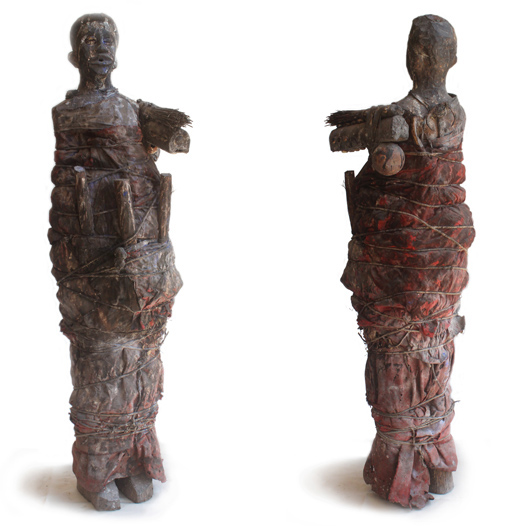
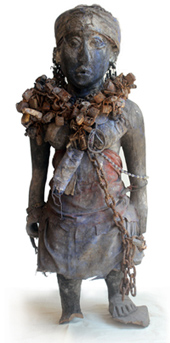
Guardian, upper Mono.
Togo. ca. 1980
92 cm
no more on sale. The guardian became privat and iss feeded with red oil. |
| Contemporary Art for sale |
| |
|
Works by Bill Kouélany, Berry Bickle, Ayana V. Jackson, Zohra Opoku, Manuela Warstat, Marcia Kure, Nicole Guiraud, George Osodi, Fréderic Bruly Bouabré, Daniel Kojo Schrade, Jürgen Schadeberg, Mansour Ciss, Aboudramane, Moké, Chéri Samba, Ralf Schmerberg and Goddy Leye.
For sale on behalf of clients, works by Pascale Marthine Tayou, Owusu-Ankomah und Malam Artists
|
|
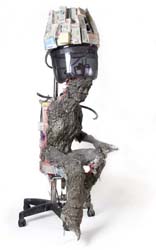
To sell in order for a Francfort collector
Euro 8,800,-
see more works available from Malam |
Malam
La Chimiothérapie
From the Series: The Blood of Others
2007, Plaster, pharmaceutic wrappings, bottles, chair, 156 cm.
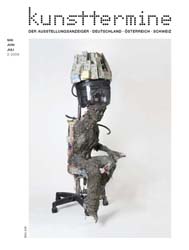
|
|
Since many years Peter Herrmann is supporting the thesis, that since around the tenth century there ist cast-bronze in the today Benin-City. In opposition to ethnologists, who declare a shift of this technique from Ife to Benin in the 14th century. The discussion on a nigerian blog is using ceveral arguments to change art history in many points and leads to the gallery website using stylistic comparisons and the TL-Analyses of Kotalla Laboratory.
http://www.nairaland.com/392592/edo-colonized-yorubaland-not-vice/4
|
| The Monument - Art in Public Space
|
|
The so called Monument in Baguida was build by Paul Ahyi to remember the german-togolees friendship and was inaugurated in 1984. In this essay the middleman of art Peter Herrmann looks with humor more on the context then on the art itself. |
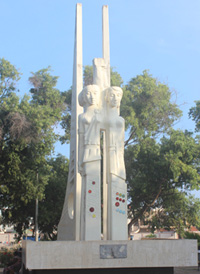 |
Ein sehr schönes Denkmal im Stil der 1970er wurde 1984 von Herr Diktator Gnassingbe Eyadema zum Andenken an die wunderschöne Zeit mit den Deutschen eröffnet. Zeiten, wo es am Schluss einer Züchtigung noch einen extra Hieb für den Kaiser gab und Recht und Ordnung noch groß geschrieben wurden. Mit den Franzosen kam dann das welsche Lotterleben und ...... column |
| ll "traffico" d'arte africana - by Matteo Koffi Fraschini
|
| |
 |
|
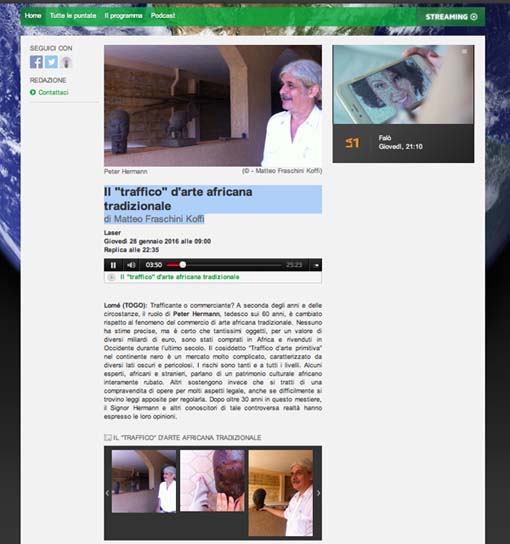
Lomé (TOGO): Trafficante o commerciante? A seconda degli anni e delle circostanze, il ruolo di Peter Herrmann, tedesco sui 60 anni, è cambiato rispetto al fenomeno del commercio di arte africana tradizionale. Nessuno ha stime precise, ma è certo che tantissimi oggetti, per un valore di diversi miliardi di euro, sono stati comprati in Africa e rivenduti in Occidente durante l’ultimo secolo. Il cosiddetto “Traffico d’arte primitiva” nel continente nero è un mercato molto complicato, caratterizzato da diversi lati oscuri e pericolosi. I rischi sono tanti e a tutti i livelli. Alcuni esperti, africani e stranieri, parlano di un patrimonio culturale africano interamente rubato. Altri sostengono invece che si tratti di una compravendita di opere per molti aspetti legale, anche se difficilmente si trovino leggi apposite per regolarla. Dopo oltre 30 anni in questo mestiere, il Signor Hermann e altri conoscitori di tale controversa realtà hanno espresso le loro opinioni.
RSI - Radiotelevisione svizzera - January 28 - 25 minutes - ll "traffico" d'arte africana |
|
| |
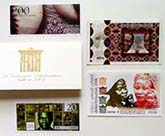
55 Set's including four from seven notes in a noumbered Couvert. Until 31.12.2011 each 300,- Euro >> Afro
|
|
Exampel: Nr. PH8 |
|
With a series of printed Afro-notes on canvas El Hadji Mansour Ciss dit Kanakassy won 2008 the 1. Price of the Dakar-Biennale. |
| World largest Balaphon for sale |
|
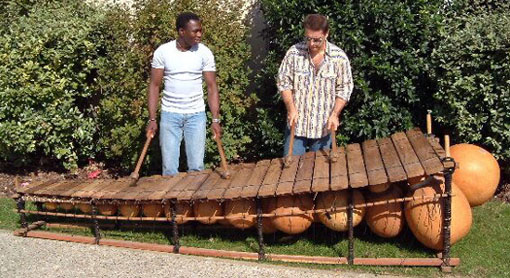
...This diatonic balaphone has 29 slats made of palisander. Calebasses serve as soundboxes, all elements are tied togehter with cowhide cords. In order to produce a sound that sends out soft metallic vibrations, membranes of a smoothed out spider´s nest have been attached to the inside of the soundboxes. Four sticks with natural caoutchouc for playing the instrument.
The balaphone is 3 metres in length and up to 1.35 metres in width. Built for professional purposes, it is, to our knowledge, one of the largest instrument of its kind. During four months, Aly Keïta has traveled to three countries to find calebasses of the size needed.... more >> |
| |
|
|
|
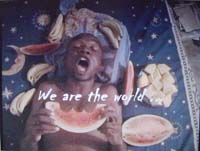
We are the World
Video -
3/5
Goddy Leye
sold to the
Centre Georges Pompidou, Paris
and
Fondazione Fotografia, Modena |
|
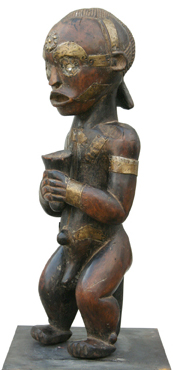
The most beautiful of all Fang figures. South Cameroon.
Arrived in Berlin during German colonial times
Sold to a south German collection
|
| |
|
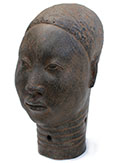
Head
Ife-Culture.
appr. 1450. Bronze. 33 cm.
|
|
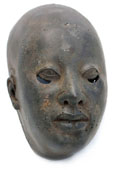
Mask
Ife-Culture, Nigeria.
appr. 1800
Bronze. 31 cm |
|
This head is one of the best replica the gallerist has ever seen. He's now included in the collection of fakes of the Ralf Kotalla Laboratory.
|
|
Head
Ife-Culture
Between 1 and 50 years. Replica
Bronze. 32,5 cm |
| |
|
|
|
| |
|
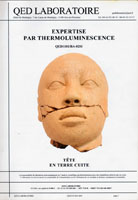
Head
Ife, Nigeria
18. cen. 19 cm
Terrakotta
|
|
| |
 |
|
|
Thermoluminescence Expertise
by QED Laboratoire |
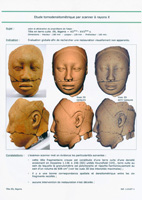
Tomodensitométrique | scanner à rayon X
Dr. Marc Ghysels. Radiologistpdf |
| |
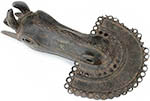 |
Ram
Owo-Culture.
Around 1850
Bronze. 40 cm
sold |
|
|
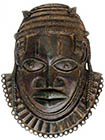 |
Beltmask
Edo-Culture
Around 1650
Bronze. 28 cm
sold |
|
| |
Guardian, upper Mono.
Togo. ca. 1980
93 cm
sold |
 |
| |
sold Nov. 2017 - Ife-Mask from a private collection in Lomé.
From this type of bronze are existing far more then described in ethnologic literature. Accordingly the prices adapt themselves to the new situation. The Maske is examined stilistically and for patina by Peter Herrmann and is sold by order. A TL-Analyse was done some years ago at Labor Kotalla and will be supplied later. more |
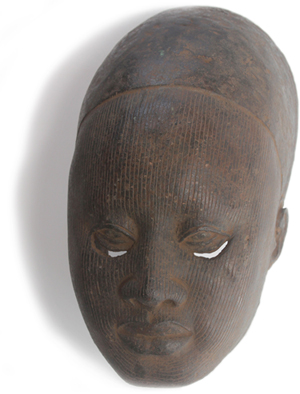 |
With this image the mask is published oficially (11.5.2017) and corresponds therefore to the demands of the UNESCO-Convention |
|
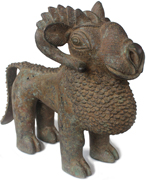 |
Ram - Aquamanile
Owo-Culture, Nigeria
around 1650 (TL)
Bronze
h 24 cm | l 38 cm
sold to privat collection Singapur |
|
|
|
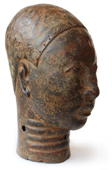
Head
Ife-Culture
appr 1350
Bronze. 30,5 cm
sold in November 2020 to a german collection
|
|
|
Interesting non-commercial activities from Peter Herrmann. Site under construction. more >> |
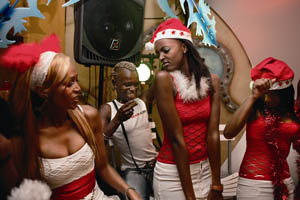
| The Carneval Newsletter
|
we got many comments :-) |
| Carneval |
 |
|
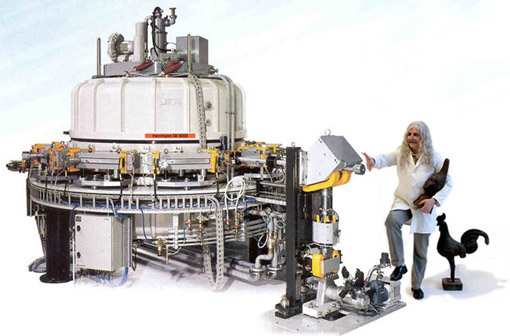
We are the experts for strontium-90 and colbalt-210, beta, gamma, and other irradiations. Whether with or without aluminum, we offer every zinc percentage and are your specialists for alloys of every kind....
Our methods are developed and recommended by recognized anthropologists with credible doctorate degrees.>>
|
| |
Newsletter | Original and Fake | Owo and Ife | 14.1.2016 |
| |
Newsletter | Bronzes | Aboudramane| Ticker | 25.11.2015 (german) |
| Peter ToGo | Bye Bye Berlin
|
August 2013 |
| |
As it looks now, we'll conduct our exhibition activities in Lomé, where we're looking for suitable premises starting in the summer of 2014. As always, we're open to and available for participation in other projects. We'll leave behind an art storage space and a small office in Germany.
"Why Lomé?" many have asked. "Why Togo?" The answer is simple. |
| |
In Berlin, neither contemporary nor ancient African art managed to establish itself commercially. When it comes to the art scene, Eurocentric is certainly an appropriate descriptor. In West Africa, by contrast, recent years have seen the development of a new awareness of the art historical importance of old, classical art, the emergence of a vibrant young art scene and the growth of an art-loving middle class with disposable income. For decades, Lomé has been the most popular trading center for classical West African art, geographically well-situated between Lagos and Accra, the new centers of contemporary art. The move will also bring us closer to Brazzaville, Douala and Dakar, where we are involved in projects.
After many years of "missionary" activity, personal hardships and maddening bureaucracy in Berlin, we're eager to earn some money again, get to know artists and improve our quality of life. |
| The last Exhibition in Berlin
|
| |
|
Best of Bill Kouélany, Berry Bickle, Marcia Kure, Nicole Guiraud, Klaus Schnocks-Meusen, George Osodi, Spee Nzante, Daniel Kojo Schrade, Aboudramane and Moké. Several works for sale on customers order. |
| |
Classic Art from Subsaharian Africa - Benin, Ife, Fang, Bamana, Eket, Bamileke, Nok, Sokoto, Ibo, Urhobo, Pheul, Dogon, Unterer Kongo, Ngbaka, Marka ... |
|
|
Most well known to our regular visitors is the video We are the World, the second edition of which we were able to sell to the Fondazione Fotografia in Modena a few years ago. At the end of 2012, the Centre Georges Pompidou decided to buy Edition III of five, a special honor. Naturally, we will show this film again as well. |
| Rosy Future | ifa-Galleries
|
| |
"Soldiers" with their "Weapons" for a Museum of contemporary art in Tunis |
|
Halim Karabibene was photographing for the exhibition:
Rosy Future - Contemporary Art from Tunisia.
fa Gallery Berlin
1210. – 21.12.2012
ifa Gallery Stuttgart
01.02. – 07.04.2013 |
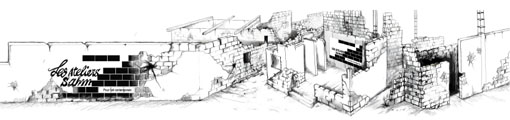
| Les ateliers Sahm | by Bill Kouélany
|
|
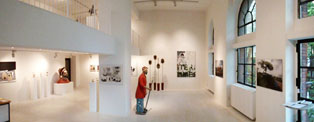
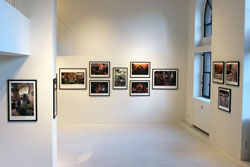
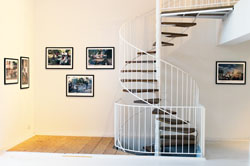
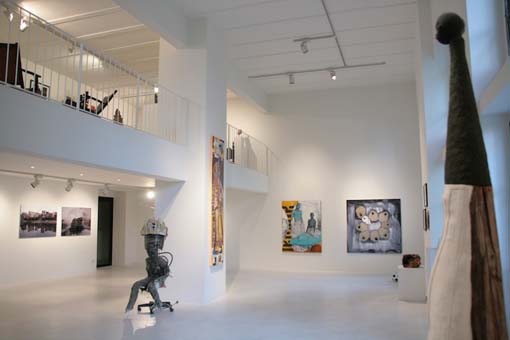
Photos of the last gallery space in Berlin >> |
|
| Bye Bye Berlin | Jürgen Schadeberg
|
| |
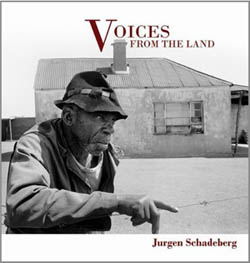
Voices from the Land & City in South Africa today |
|
A gallery opening, a farewell gala, and an 82nd birthday party, all in one night.
Although Berlin-born Jürgen Schadeberg and his wife Claudia are already leaving the city they had hoped to settle in, after having returned for only two years. They are moving on, to the south of Spain, where people will be willing to be photographed once more. We would like to hold a joyous vernissage a few days before he leaves and celebrate the move and his birthday with him. |
| |
In the exhibition we show 75 photographs extracted from the series Voices from the Land and Tales from Jozi. An accompanying film program is being prepared.
Voices from the Land depicts black and white images of agrarian South Africa, where people continue to live in near feudalism until today, and poverty is close at hand. This subtle and calm series displays the documentarian claim of the photographer. In contrast is the series Tales from Jozi. Here, the blazing city life jumps to color and shows us Johannesburg in all its facets. The books on these series and others, such as The Black and White Fifties, which we exhibited in 2003, will be sold in the gallery. |
| |
 |
Bye Bye Berlin, 82nd birthday
and farewell party:
Exhibition: March 19 - May 11, 2013
Exhibition opening: With food, drinks, and live music: March 18, 2013 | 19:00
Mike Russel - Guitar
Max Hughes - Bass
Kenny Martin - Drums
Lionel Haas - Keyboard
Soulymane Touré - Talking Drum |
| |
DJ Armin Engel. - Music from South Africa of the last fifty years
In the Video-room: Films from and with Jürgen Schadeberg
Catering: Ebe Ano. Nigerian Fingerfood.
Introduction: Peter Herrmann |
|
Group exhibition - Best of Bill Kouélany, Berry Bickle, Ayana V. Jackson, Zohra Opoku, Manuela Warstat, Marcia Kure, Nicole Guiraud, George Osodi, Fréderic Bruly Bouabré, Daniel Kojo Schrade, Mansour Ciss, Aboudramane, Moké, Chéri Samba, Ralf Schmerberg, Mamadou Gomis and Goddy Leye. Works for sale on customers order by Pascale Marthine Tayou, Owusu-Ankomah and Malam. |
| Zohra Okpoku & Goddy Leye |
| |
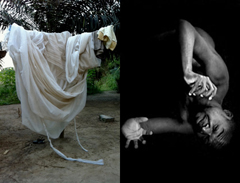 |
Handwash Only & Hommage
Installation and Video | A Project in Cooperation with Ifa (Institut for Foreign Cultural Relation) Parallely to their exhibitionin prêt-à-partager our big exhibition hall and in the Video-R oom.
Exhibition:
28.4. - 7.7.2012
Opening:
April 27, 8 pm
|
| |
Laudatio:
Dr. Uschi Eid & Madam Elke aus dem Moore
Music:
Souleymane Touré
und
Veronika Vogel & Jeff Chappah
Simone Gilges & Mamadou Gomis
Berlin/Dakar
more >> |
|
| |
KLICK! Photo Competition: Winner from Senegal
Conference participants also voted for the winner of the photo competition, "KLICK! Your View of Culture and Education." More than
10,000 Internet users from around the world voted for their favorite
ten photos from all of the submissions in advance of the Deutsche
Welle Global Media Forum. From these ten, Mamadou Gomis from Senegal
with "Need to Know" was selected as the winner. Second place went to "Child Teacher" by Ehtisham Ahmad Farooqi from Pakistan, and in third
place was Jake Reeder from the USA with "DPDHL TeachForAll. India
School in Mumbai." The photos from the contest can be seen at www.dw-gmf.de. |
|
Laudatio |

|